
Guide
How to Build a Habit That Sticks: 7 Steps Backed by Research
A practical, research-backed guide to building good habits: start small, pick a cue, plan when and where, track your progress and plan for the bad days.

Everyone knows what a good habit looks like. The hard part is the gap between deciding to do something every day and actually doing it on day 23, when it’s raining and you’re tired.
Here are seven steps that close that gap, each based on what research has found about how habits form.
1. Shrink it until it’s easy
A habit is a behaviour your brain has linked to a cue, so that the cue starts it automatically. Simple behaviours form that link faster than demanding ones: in one well-known study, people who picked an eating or drinking habit got there sooner than those who picked exercise.
So shrink it. Not “go to the gym”, but “put on my gym clothes”. Not “read more”, but “read two pages”. Once the small version is automatic, it’s easy to grow it. The other way round rarely works.
2. Attach it to something you already do
Habits run on cues: a time, a place, or something you already do. The most reliable cue is an existing habit, because it happens every day anyway. This is often called habit stacking:
- After I pour my morning coffee, I’ll write one line in my journal.
- After I brush my teeth at night, I’ll floss.
- After I sit down on the train, I’ll read.
Pick a cue that happens every day at a similar time, in the same place. Mornings are full of cues like these; our morning routine ideas show how to chain several together.
3. Decide exactly when and where
Psychologists call this an implementation intention: a plan in the form “When X happens, I will do Y.” A large review by Peter Gollwitzer and Paschal Sheeran, covering 94 studies, found these if-then plans had a medium-to-large effect on whether people followed through.
The magic is in the detail. “I’ll exercise more” is a wish. “On Monday, Wednesday and Friday, when I get home from work, I’ll change and go for a 20-minute run” is a plan your future self can follow without deciding anything.
4. Make it easy to start and hard to skip
Remove the friction from the first step:
- Running shoes next to the bed.
- The book on your pillow.
- The water bottle already filled on your desk.
And add a little friction to whatever competes with it: the phone charging in another room, the snacks on a high shelf. You’re designing your surroundings so the habit is the path of least resistance. The same idea works in reverse when you want to drop a habit, as our guide on how to break a bad habit explains.
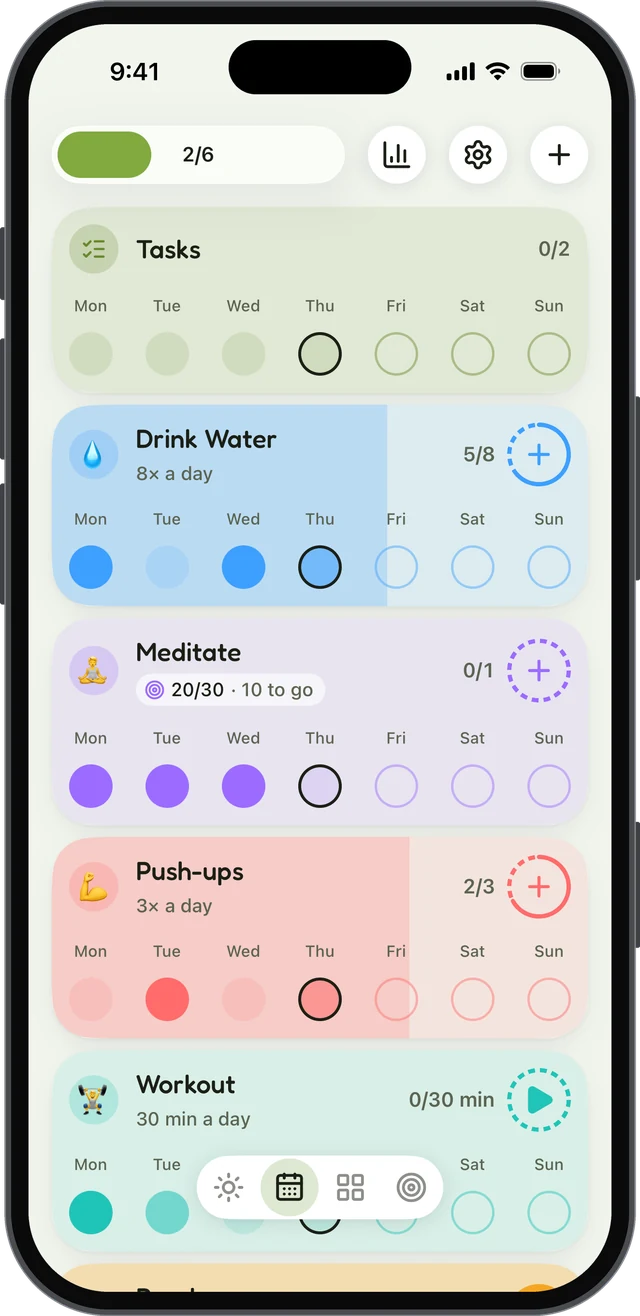
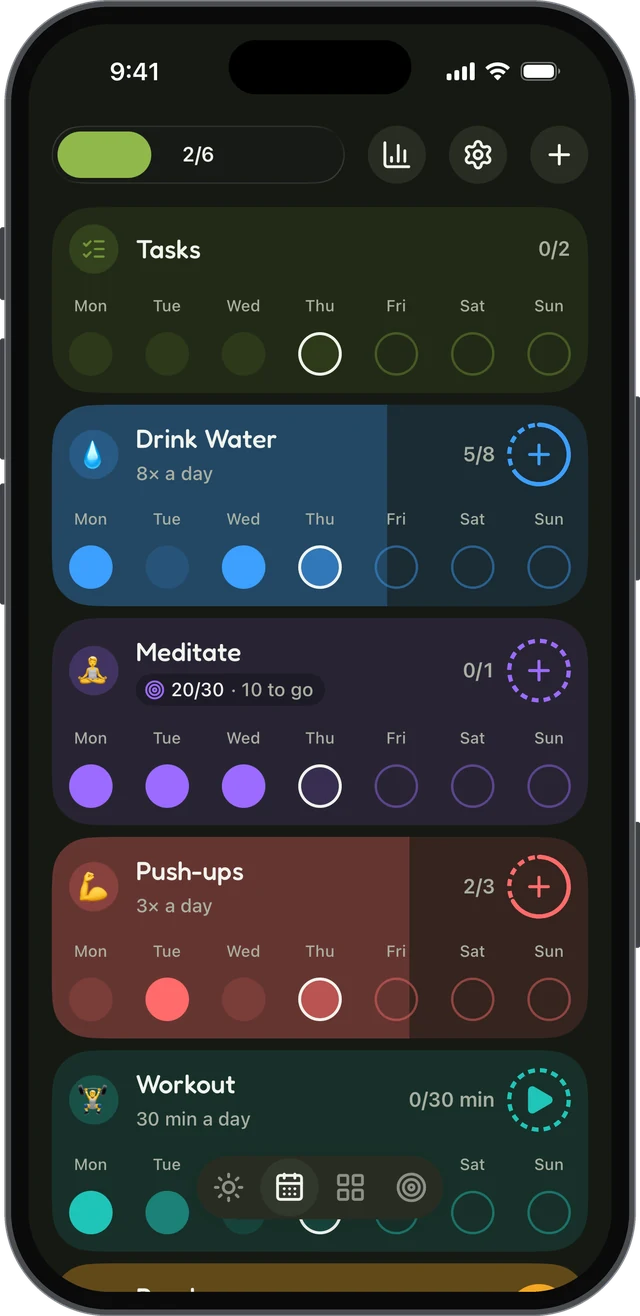
5. Track it where you can see it
Tracking isn’t only record-keeping. A meta-analysis of 138 studies by Benjamin Harkin and colleagues found that monitoring your progress towards a goal helps you reach it, and that it helps more when you physically record it.
Seeing the days fill in is satisfying in itself, and it turns an abstract goal into something you can look at. It also shows you patterns: maybe you always miss Thursdays, and your Thursday plan needs changing. If you’d rather track on paper, our free printable habit tracker puts a month of habits on one page. If you’d rather use an app, our comparison of the best habit tracker apps looks at seven of them.
6. Plan for the bad days
You will miss a day. Everyone does, and research on habit formation found that missing a single day doesn’t noticeably slow the process down. The danger is letting one miss turn into several.
Decide in advance:
- Your minimum version. On a bad day, what’s the smallest thing that still counts? One push-up, one page, one minute.
- Your rule for misses. A good one: never miss twice. We wrote a whole guide on what to do after a missed day.
7. Give it two months, and celebrate the milestones
Most daily habits take around two months to become automatic, not the 21 days you may have heard. In the best-known study the median was 66 days, with a range from 18 to 254. Read more in how long it takes to form a habit.
Set a goal that matches: 30 days to start, 66 days to make it stick. And give the milestone some meaning. In habitual, you can write a letter to your future self that stays sealed until you reach your goal.
Putting it together: an example
Say you want to read more. Following the steps:
- Small: read 10 pages.
- Cue: after I get into bed.
- When and where: every night, in bed, before I touch my phone.
- Easy: the book lives on my pillow; the phone charges in the kitchen.
- Track: tick it off in a habit tracker each night.
- Bad days: one page counts. Never miss twice.
- Goal: 66 days, with a letter to open at the end.
That’s a habit with a real chance of sticking. To keep it going once the first enthusiasm fades, our guide on how to stay consistent has eight research-backed ways. If you’re not sure which habit to start with, our list of self-care habits has 50 small ideas, grouped by area. If it’s sleep you want to improve, our guide to habits for better sleep has nine to choose from.
The short version
- Start small.
- Attach it to something you already do.
- Plan when and where.
- Make it easy to start.
- Track it.
- Plan for bad days: never miss twice.
- Give it two months.
Need ideas for what to start with? Here are 60 habits to track, and 40 good habits for students.
Sources
- Lally, P., van Jaarsveld, C. H. M., Potts, H. W. W., & Wardle, J. (2010). How are habits formed: Modelling habit formation in the real world. European Journal of Social Psychology, 40(6), 998–1009.
- Gollwitzer, P. M., & Sheeran, P. (2006). Implementation intentions and goal achievement: A meta-analysis of effects and processes. Advances in Experimental Social Psychology, 38, 69–119.
- Harkin, B., Webb, T. L., Chang, B. P. I., Prestwich, A., Conner, M., Kellar, I., Benn, Y., & Sheeran, P. (2016). Does monitoring goal progress promote goal attainment? A meta-analysis of the experimental evidence. Psychological Bulletin, 142(2), 198–229.
Questions
What is the best way to build a new habit?
Start with a very small version of the behaviour, attach it to a cue that already happens every day, decide exactly when and where you’ll do it, and track it. Repeat it in the same context until it starts without much thought, which usually takes around two months.
What is an implementation intention?
It’s a plan in the form 'When situation X happens, I will do Y', for example 'When I finish breakfast, I’ll take my vitamins.' A large review of studies found these plans help people follow through on their goals.
Does tracking habits actually help?
Yes. A meta-analysis of 138 studies found that monitoring progress towards a goal helped people reach it, and it helped more when the progress was physically recorded or shared.
Keep reading
- Guide
How to Stay Consistent: 8 Ways That Don’t Need Motivation
How to stay consistent when motivation fades: eight research-backed ways to keep a habit going, plan for missed days and count your progress. - Guide
Habits for Better Sleep: 9 That Work and How to Keep Them
Nine habits for better sleep, from a fixed wake time to a caffeine cut-off, what the research says about each, and how to make them stick. - Guide
How to Break a Bad Habit: 7 Steps That Work (With Research)
How to break a bad habit for good: find the cue, change your surroundings, plan a replacement and watch for slips. Seven steps, each backed by research.