
Ideas
60 Habits to Track, and How to Pick Your First Three
Ideas for what to track in a habit tracker: health, mind, work, home, money and habits to quit. Plus how to pick the first three so they actually stick.

The hardest part of using a habit tracker isn’t the tracking. It’s deciding what to track. Pick too many and you’ll drop them all by week two. Pick something vague like “be healthier” and there’s nothing to tick off.
Below are 60 ideas for every part of life, then a simple way to choose the first three.
Count, time or quit: the three shapes of a habit
Most habits fit one of three shapes, and it helps to know which one yours is:
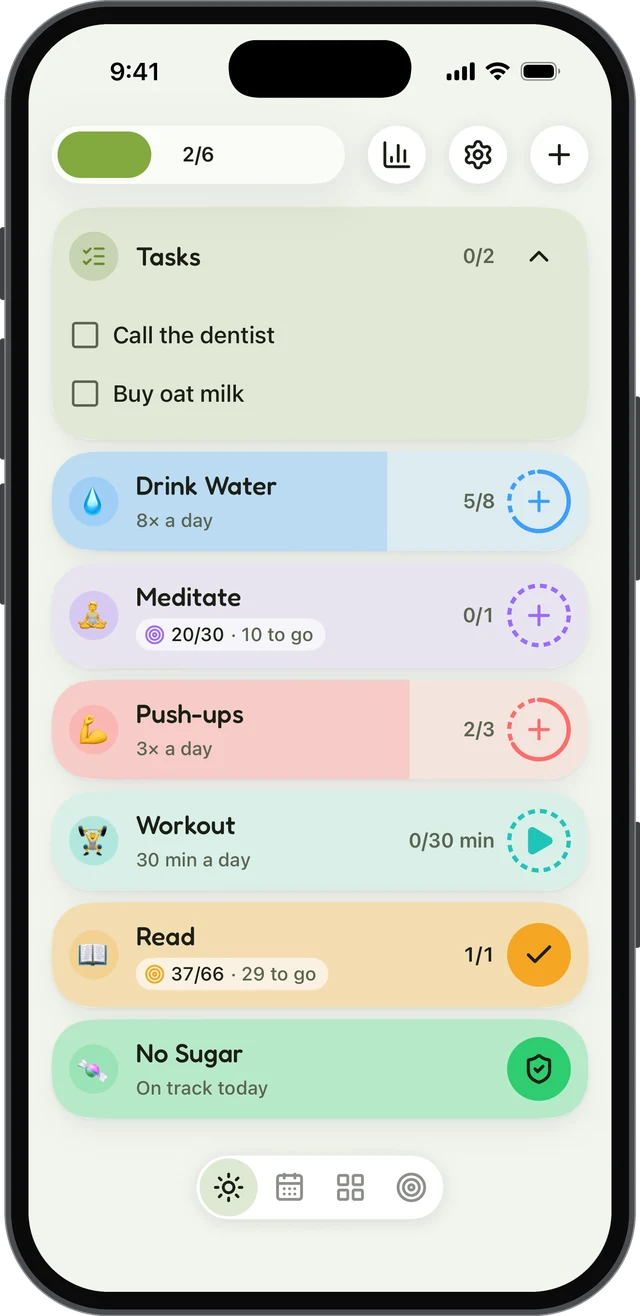
- Count habits: something you do a number of times a day. Drink 8 glasses of water. Do 3 sets of push-ups.
- Time habits: something you do for a length of time. Meditate for 10 minutes. Read for 30.
- Quit habits: something you’re stopping. You track the days you stayed on track. No sugar. No smoking. No phone in bed.
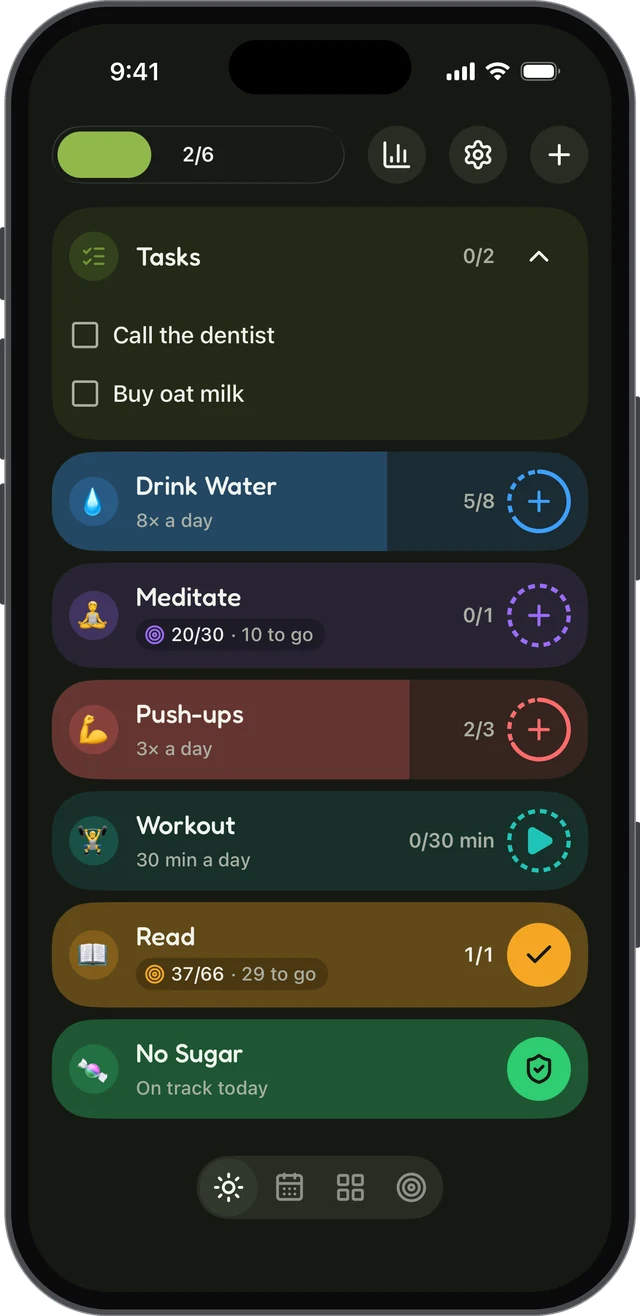
habitual tracks all three: a tap adds one to a count, a timer runs a time habit, and a quit habit shows how long you’ve been on track.
Health habits to track
- Drink 8 glasses of water
- Walk 8,000 steps
- Go for a run
- Work out for 30 minutes
- Stretch for 10 minutes
- Eat a vegetable with every meal
- Take your vitamins or medication
- In bed by 11 pm
- Floss
- Do 3 sets of push-ups
- Cook dinner at home
- Get outside in daylight before 10 am
Mind and wellbeing habits
- Meditate for 10 minutes
- Write in a journal
- Write down three things you’re grateful for
- Read 10 pages
- No screens for the first 30 minutes of the day
- Breathe slowly for 2 minutes
- Spend 15 minutes on a hobby
- Practise a language for 10 minutes
- Learn something new for 15 minutes
- Go for a walk without your phone
For small ways to look after your body, mind and relationships, see our 50 self-care habits.
Work and study habits
- Plan tomorrow before you finish today
- One hour of focused work before email
- Inbox to zero
- Study for 30 minutes
- Practise an instrument
- Write 300 words
- Review your week every Friday
- Take a proper lunch break
- Stand up and move every hour
- Finish the day’s most important task first
If you’re at school or university, there are more ideas in our list of good habits for students.
Home and life admin
- Make your bed
- Tidy for 10 minutes
- Wash the dishes before bed
- Water the plants
- Lay out tomorrow’s clothes
- Do one load of laundry
- Prepare lunch for tomorrow
- Walk the dog
Money habits
- Write down what you spent
- No-spend day
- Move money to savings
- Check your budget for 5 minutes
- Pack lunch instead of buying it
Relationships
- Message a friend
- Call your parents
- Eat dinner without phones
- Do something kind for someone
- Spend 20 minutes of one-on-one time with your child or partner
If you’re building habits as a family, our list of healthy habits for kids has ideas for children, from bedtimes to brushing teeth.
Habits to quit
- No sugar
- No alcohol
- No smoking or vaping
- No social media before noon
- No phone in bed
- No snacking after dinner
- No energy drinks
- No nail-biting
- No online shopping
- No hitting snooze
How to choose your first three habits
Sixty is a list, not a plan. Here’s how to turn it into one.
1. Pick one easy win, one that matters, and one you’re curious about. The easy win (make your bed, drink water) gives you something to tick off every day. The one that matters is your real goal. The curious one keeps it fun.
2. Make each one small enough for a bad day. If you can’t do it when you’re tired and busy, shrink it. “Read 10 pages” beats “read more”.
3. Tie each one to something that already happens. After I pour my coffee, I’ll take my vitamins. After I brush my teeth, I’ll floss. The cue is what eventually makes a habit automatic. Our guide to habit stacking has 30 more examples like these.
4. Give it time. Most daily habits take around two months to become automatic, not three weeks. Read how long it takes to form a habit for the numbers behind that.
5. Add the fourth only when the first three feel easy.
That’s also why habitual’s free version gives you up to three active habits: enough to make a real change, few enough to keep them all going.
If you have ADHD and are still choosing an app, we compared seven habit trackers for ADHD and who each one suits. If you were hoping to use Streaks on Android, it isn’t available there; our Streaks app alternative post compares it with habitual. For everyone else, our comparison of the best habit tracker apps looks at seven popular ones.
Set a goal for the one that matters
Once you’ve chosen, give your most important habit a goal: a number of days to reach, like 30 or 66. In habitual, goals only count up, so a missed day never takes days away. And you can write a letter to your future self that opens when you get there.
The short version
- Know your habit’s shape: count, time or quit.
- Pick three: an easy win, one that matters, one you’re curious about.
- Make each small and attach it to something you already do.
- Give it two months, and add more only when it feels easy.
Questions
What are good habits to track?
Good habits to track are small, specific and daily: drink 8 glasses of water, read 10 pages, walk for 20 minutes, no phone in bed. Pick ones you can do on a bad day, tied to something that already happens every day.
How many habits should I track at once?
Start with one to three. Each new habit takes about two months to become automatic, and tracking too many at once makes it easy to drop all of them. Add more once the first ones feel easy.
Should I track habits I want to quit?
Yes. Tracking a quit habit as days on track, like days without sugar or without smoking, gives you something to count up instead of only something to avoid.
Keep reading
- Ideas
Morning Routine Ideas: 40 Small Habits and How to Keep Them
40 morning routine ideas, grouped by what they do, plus 5-, 15- and 30-minute routines and what research says about making morning habits stick. - Ideas
Healthy Habits for Kids: 45 Ideas and How to Make Them Stick
45 healthy habits for kids, grouped by sleep, food, play, teeth, screens and feelings, with the guidelines behind them and how to make them stick. - Ideas
Self-Care Habits: 50 Small Ideas and How to Make Them Stick
50 self-care habits for body, mind and the people around you, the research behind the ones that matter most, and how to choose three you’ll keep.